biology
Resources
View all
How sugar affects the brain - Nicole Avena
Understanding sugar's impact on your brain chemistry.

TED-Ed: Do You Really Need 10,000 Steps a Day?
For years, Jean Béliveau walked from country to country, with the goal of circumnavigating the globe on foot. While few people have the time or desire to walk such extreme lengths, research shows that adding even a modest amount of walking to your daily routine can dramatically improve your health. So, what exactly happens to your body when you increase your step count? Shannon Odell investigates.

TED-Ed: Making Sense of How Life Fits Together
From something as miniscule as a cell to the biosphere we all call home, living things fit together in numerous interesting ways. Bobbi Seleski catalogs biology from our body and beyond, tracking how unicellular organisms, tissues, organs, organ systems, organisms, populations, communities, ecosystems, and our biosphere build off of each other and work together.

TED-Ed: What's the Best Position to Sleep In?
Sleep positions go by countless creative names— the zombie, mountain climber, free faller, soldier, and more. Yet sleep experts typically simplify them into the basic types: side, stomach, or back. Individual sleep styles are highly personal, but how we spend the night affects our bodies and health in several ways. So, what’s the best position to sleep in? Rachel Marie E. Salas investigates.
TED-Ed: Can You Change Your Sleep Schedule?
An early bird rises with the sun, springing out of bed abuzz with energy. Meanwhile, a night owl groggily rises much later, not hitting their stride until late in the day. How many people are truly night owls or early birds? And are our sleep schedules predetermined at birth, or can we change them? Explore how our circadian systems act as internal clocks to keep our bodies functioning properly.
TED-Ed: How Does Caffeine Keep Us Awake?
Over 100,000 metric tons of caffeine are consumed around the world every year. That’s equivalent to the weight of 14 Eiffel Towers! Caffeine helps us feel alert, focused, and energetic, even if we haven’t had enough sleep — but it can also raise our blood pressure and make us feel anxious. So how does it keep us awake? Hanan Qasim shares the science behind the world’s most widely used drug.
What would happen if you didn’t sleep? - Claudia Aguirre
The importance of sleep for health and cognition.

TED-Ed: How Cancer Cells Behave Differently
How do cancer cells grow? How does chemotherapy fight cancer (and cause negative side effects)? The answers lie in cell division. George Zaidan explains how rapid cell division is cancer’s "strength" -- and also its weakness.
TED-Ed: How Stretching Actually Changes Your Muscles
An athlete is preparing for a game. They’ve put on their gear and done their warmup, and now it’s time for one more routine — stretching. Typically, athletes stretch before physical activity to avoid injuries like strains and tears. But does stretching actually prevent these issues? And if so, how long do the benefits of stretching last? Malachy McHugh explores the finer points of flexibility.

TED-Ed: What Can DNA Tests Tell Us About Our Ancestry?
Two sisters take the same DNA test. The results show that one sister is 10% French, the other 0%. Both sisters share the same two parents, and therefore the same set of ancestors. So how can one be 10% more French than the other? Tests like these rely on our DNA to answer questions about our ancestry, but DNA actually can’t tell us everything. Prosanta Chakrabarty explores the accuracy of DNA tests.
TED-Ed: Why Our Muscles Get Tired
You're lifting weights. The first time feels easy, but each lift takes more and more effort until you can’t continue. Inside your arms, the muscles responsible for the lifting have become unable to contract. What’s going on? Christian Moro explains how exactly our muscles operate, and what causes them to become fatigued.

TED-Ed: How Do We Study Living Brains?
As far as we know, there’s only one thing in our solar system sophisticated enough to study itself: the human brain. But this self-investigation is challenging because a living brain is shielded by skull, swaddled in tissue, and made up of billions of tiny cells. How do we study living brains without harming their owners? Elizabeth Waters and John Borghi explain how EEGs, fMRIs, and PETs work.

TED-Ed: How CRISPR Lets You Edit DNA
From the smallest single-celled organism to the largest creatures on Earth, every living thing is defined by its genes. With recent advancements, scientists can change an organism’s fundamental features in record time using gene editing tools such as CRISPR. But where did this medical marvel come from and how does it work? Andrea M. Henle examines the science behind this new technology.
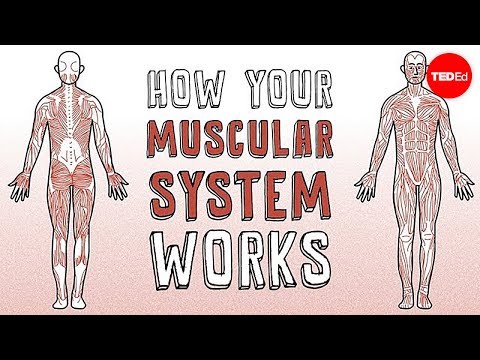
TED-Ed: How Your Muscular System Works
Each time you take a step, 200 muscles work in unison to lift your foot, propel it forward, and set it down. It’s just one of the many thousands of tasks performed by the muscular system: this network of over 650 muscles covers the body and is the reason we can blink, smile, run, jump, and stand upright. So how does it work? Emma Bryce takes you into the body to find out.
The science of skin color - Angela Koine Flynn
Discover the biology behind human skin color variation.
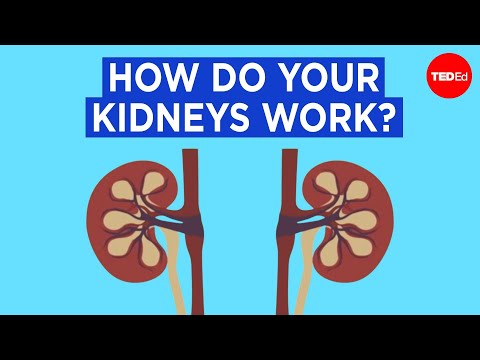
TED-Ed: How Do Your Kidneys Work?
After drinking a few glasses of water on a hot day, you might be struck with a sudden ... urge. Behind that feeling are two bean-shaped organs that work as fine-tuned internal sensors. Emma Bryce details how the incredible kidneys balance the amount of fluid in your body, detect waste in your blood, and know when to release the vitamins, minerals, and hormones you need to stay alive.

How do vaccines work? - Kelwalin Dhanasarnsombut
Understand how vaccines train your immune system.

Cell vs. virus: A battle for health - Shannon Stiles
Watch the epic battle between your cells and invading viruses.